Do I Need Private Utility Locating After Calling 811 in Georgia?
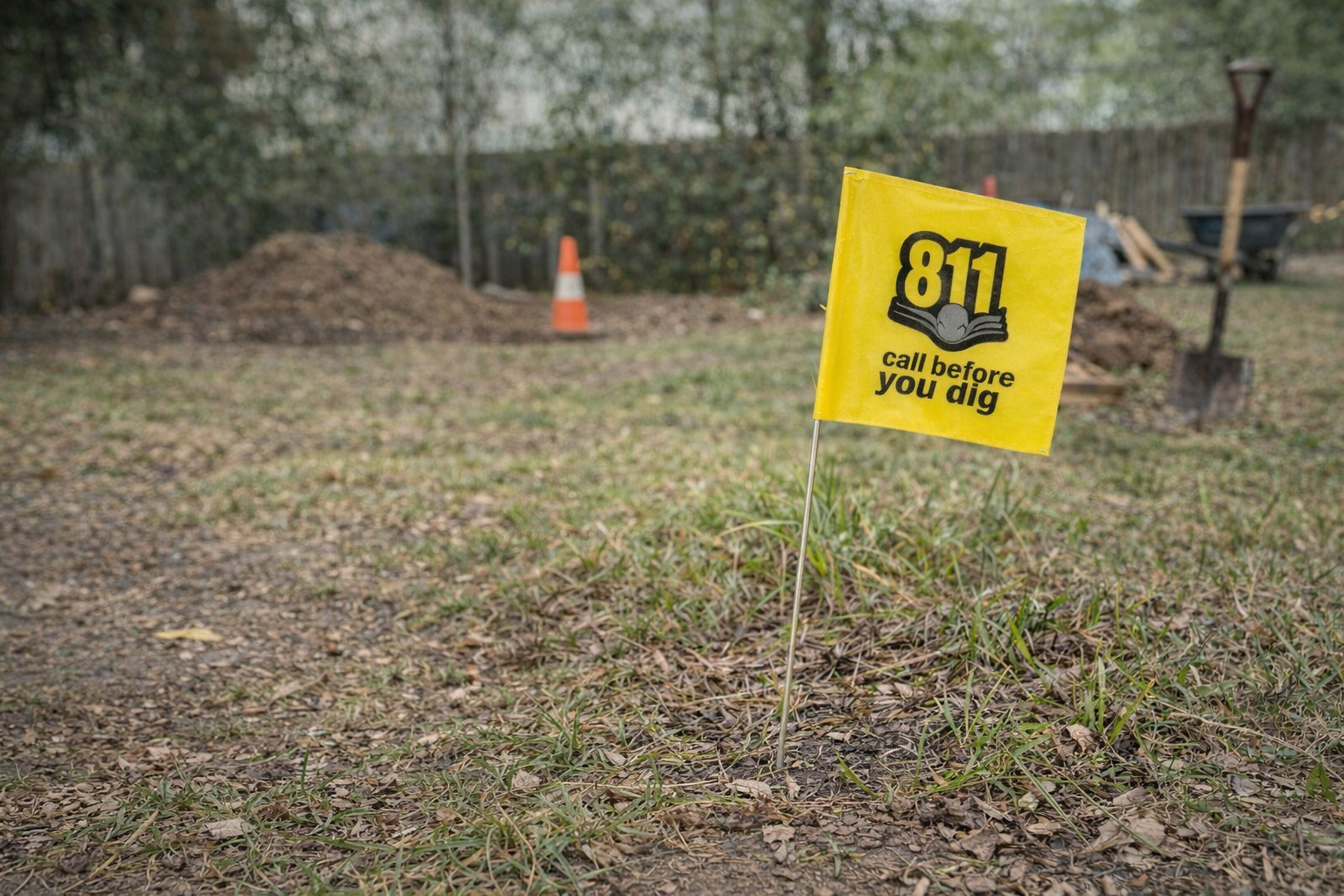
If you're planning to dig, trench, install fencing, or begin construction in Georgia, you’ve likely heard the phrase: “Call 811 before you dig.”
Calling Georgia 811 is an important first step. But many property owners and contractors are surprised to learn that 811 does not locate all underground utilities.
So the real question becomes:
Do you still need private utility locating after calling 811 in Georgia?
In many cases — yes.
Let’s break down why.
What Does Georgia 811 Actually Cover?
Georgia 811 notifies public utility owners before excavation. Those utilities typically include:
Public electric lines
Public gas lines
Public water lines
Public sewer lines
Telecommunications lines
However, these utilities are generally marked only up to the meter or public right-of-way.
That means anything beyond the meter — especially on private property — is often not covered.
What Is Private Utility Locating?
Private utility locating identifies underground utilities that are not marked by 811 services.
This may include:
Private power lines beyond the meter
Secondary electrical lines
Private water and sewer lines
Irrigation systems
Communication lines
Lighting circuits
Abandoned or undocumented lines
In Georgia, private utility locating is especially important on:
Commercial properties
Apartment complexes
Schools and churches
Industrial sites
Large residential properties
Many properties have underground utilities that were added over time and never fully documented.
Why 811 Alone May Not Be Enough
Relying only on 811 can create a false sense of security.
If excavation begins after 811 marks are complete, but private lines remain unlocated, crews may still hit:
Secondary electric feeds
Irrigation systems
Private gas lines
Sewer laterals
Unknown underground utilities
Utility strikes can result in:
Costly repairs
Project delays
Safety hazards
Potential liability
Scheduling private utility locating after 811 helps close that gap.
How EM and GPR Help Detect Private Utilities
Professional private utility locating in Georgia typically uses two technologies:
Electromagnetic (EM) Locating
Used to detect conductive utilities such as:
Electric lines
Gas lines
Communication cables
Ground Penetrating Radar (GPR)
Used to detect non-conductive utilities such as:
PVC water lines
Sewer lines
Unknown underground objects
Using both EM and GPR increases accuracy and provides a clearer picture of what lies below the surface.
When Should You Schedule Private Utility Locating?
In Georgia, private utility locating should be considered before:
Excavation or trenching
Fence or sign installation
Directional boring
Site development
Foundation work
Grading
Pool installation
Irrigation work
Any ground disturbance carries risk — especially on developed properties.
Contractors in Georgia: Why This Matters
In Metro Atlanta and throughout Georgia, many commercial sites contain complex underground utility networks. Over time, additions and renovations can create undocumented lines.
For contractors, scheduling private utility locating protects:
Crew safety
Equipment
Project timelines
Client relationships
It’s not just about compliance — it’s about reducing risk.
So, Do You Need Private Utility Locating After Calling 811?
If your project involves digging beyond the public right-of-way or on private property in Georgia, private utility locating is strongly recommended.
Calling 811 is the first step.
Private locating helps ensure you know what 811 does not mark.
Final Thoughts
Understanding what is below the surface before excavation begins is one of the most important steps in any construction or improvement project.
In Georgia and across the Southeast, combining 811 notification with professional private utility locating provides the highest level of protection.
If you’re unsure whether your project requires private utility locating, it’s always worth asking before breaking ground.
Accuracy You Can Build On.