What Happens If You Hit a Utility Line? Costs, Delays & Safety Risks
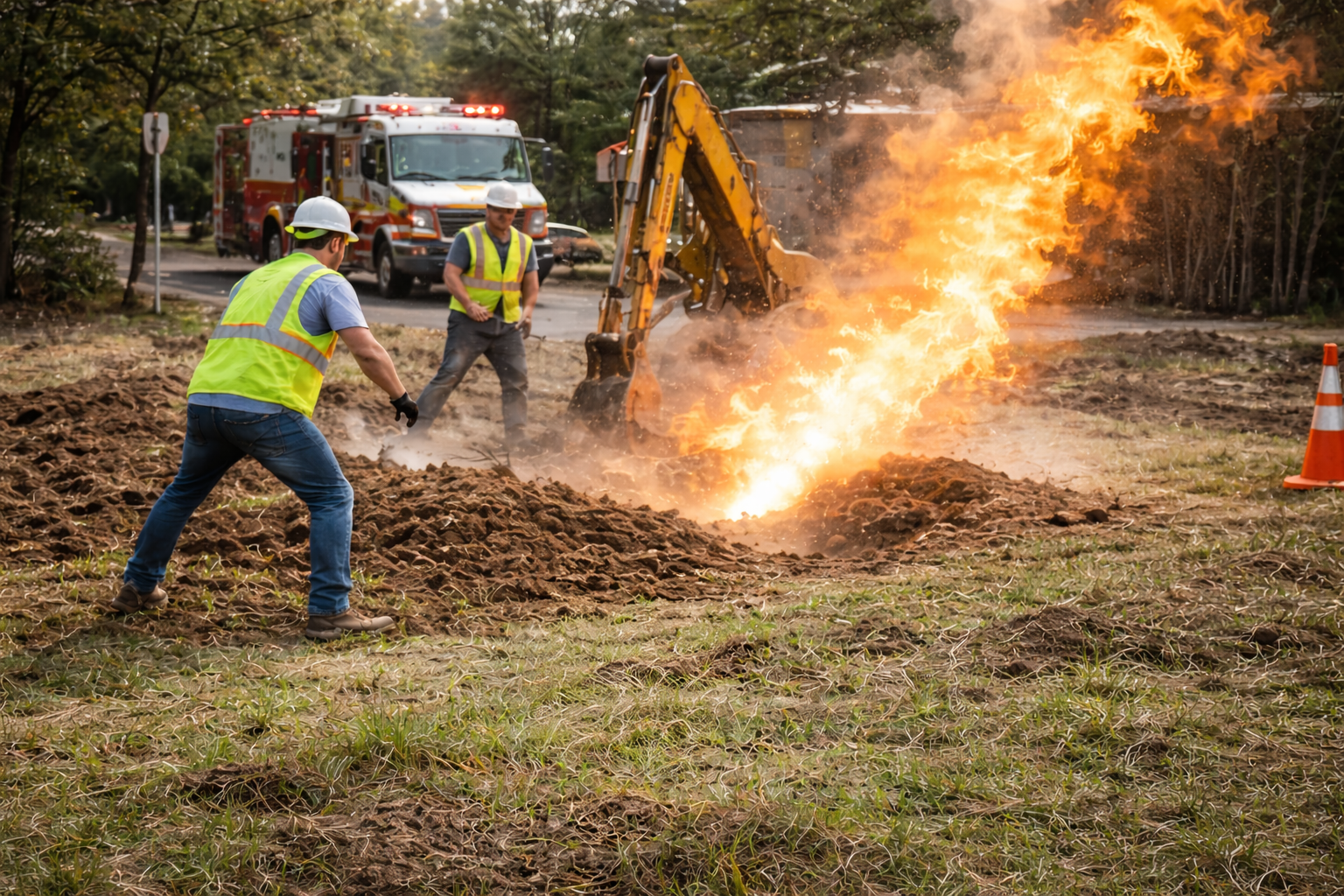
Excavation is part of construction. But striking an underground utility line can turn a routine project into a serious problem.
Whether you’re a contractor, developer, or property owner in Georgia, understanding the real consequences of a utility strike helps you make safer, more informed decisions before breaking ground.
Let’s look at what can happen — and why proper utility locating matters.
Immediate Safety Risks
The most serious consequence of hitting a utility line is safety.
Depending on the utility type, a strike can result in:
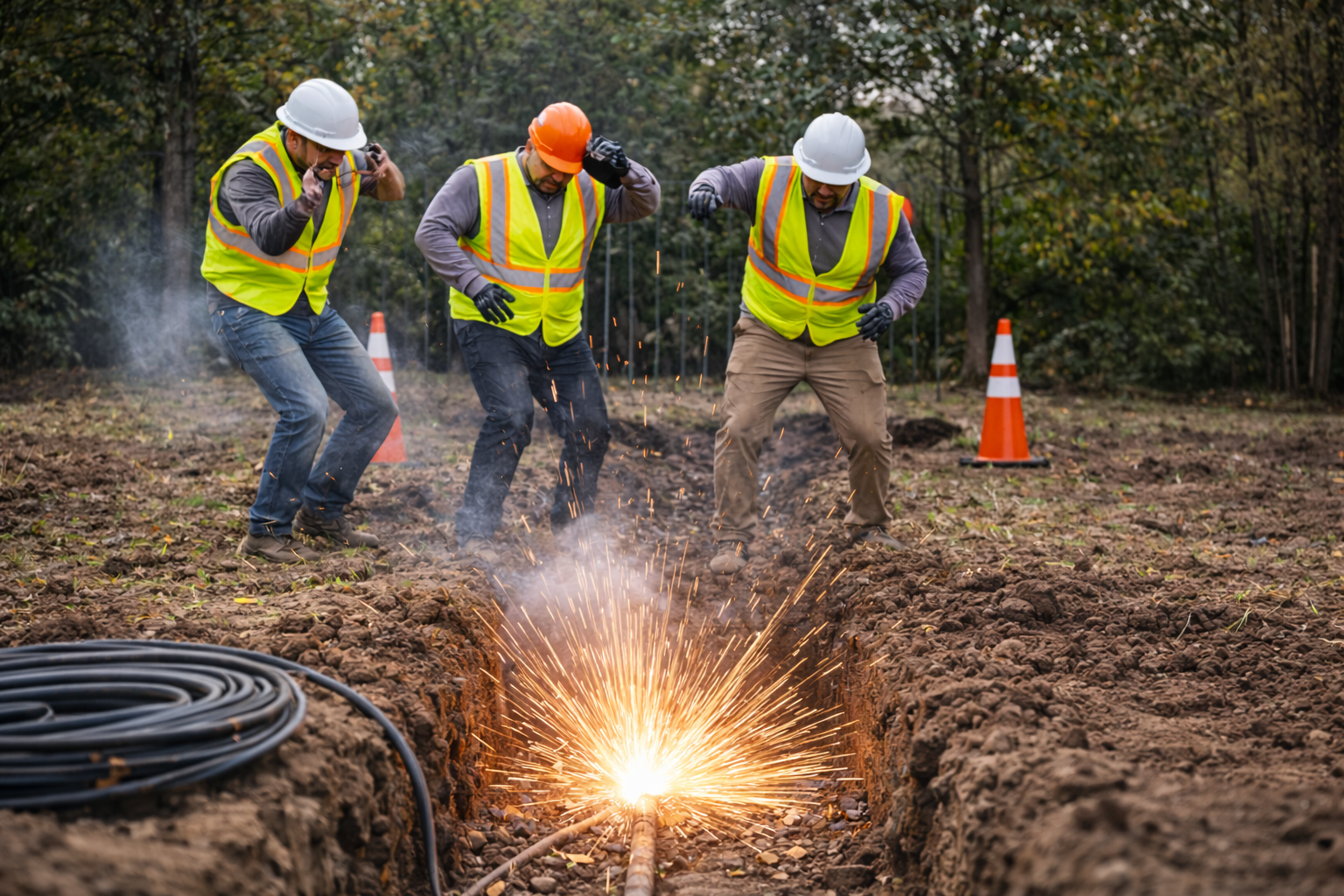
Electrical shock or arc flash
Gas leaks and potential explosions
Flooding from water main breaks
Sewage exposure
Communication outages
Even minor utility strikes can create hazardous jobsite conditions. In some cases, emergency responders must secure the area before work can resume.
Crew safety should always be the top priority.
Financial Costs of a Utility Strike
The cost of hitting a utility line varies depending on the type and severity of the damage.
Expenses may include:
Repair or replacement of damaged utilities
Emergency response fees
Equipment damage
Downtime for crews and machinery
Delays impacting other trades
Potential fines or penalties
Even smaller incidents can cost thousands of dollars. Larger strikes — especially involving gas or high-voltage electric lines — can become significantly more expensive.
For contractors in Metro Atlanta and across Georgia, project delays alone can impact scheduling, subcontractors, and overall profitability.
Project Delays and Timeline Impact
Utility strikes often bring work to an immediate stop.
Projects may be delayed due to:
Utility company investigations
Required inspections
Site shutdowns
Repairs and restoration
Permit reviews
Delays can disrupt not only one crew, but multiple trades scheduled afterward.
In commercial construction, a single delay can ripple across an entire project timeline.
Liability and Reputation
In some cases, utility strikes may lead to:
Liability claims
Insurance involvement
Contract disputes
Increased insurance premiums
Even when accidents are unintentional, reputation matters. Contractors and developers rely on trust, reliability, and professionalism.
Preventative measures reflect responsible jobsite management.
Why Utility Strikes Happen
Common causes of underground utility strikes include:
Relying only on 811 markings
Failure to schedule private utility locating
Outdated or incomplete site plans
Assumptions about utility depth
Poor communication between crews
In Georgia, many properties — especially commercial and multi-phase developments — contain private utilities not marked by 811.
Without private utility locating, unknown lines may remain unaccounted for.
How Private Utility Locating Helps Reduce Risk
Professional utility locating uses technologies such as:
Electromagnetic (EM) locating for conductive lines
Ground Penetrating Radar (GPR) for non-conductive utilities
Combining EM and GPR increases the likelihood of detecting both known and undocumented utilities.
For contractors working throughout Georgia and the Southeast, proper utility locating provides:
Greater confidence before excavation
Improved jobsite safety
Reduced financial risk
Fewer unexpected project delays
It’s not about eliminating all risk — it’s about reducing it significantly.
The Role of 811 and Private Locating in Georgia
Calling Georgia 811 is the first step before excavation. However, 811 typically marks public utilities up to the meter.
Private utilities beyond the meter often require professional private utility locating services.
Using both 811 notification and private locating together provides more comprehensive protection.
Final Thoughts
Hitting a utility line can lead to safety hazards, costly repairs, and serious project delays. While accidents can happen, many strikes are preventable with proper planning and professional utility locating.
Before excavation begins in Georgia or the Southeast, understanding what lies beneath the surface helps protect your crew, your timeline, and your investment.
When it comes to underground utilities, preparation matters.
Accuracy You Can Build On.